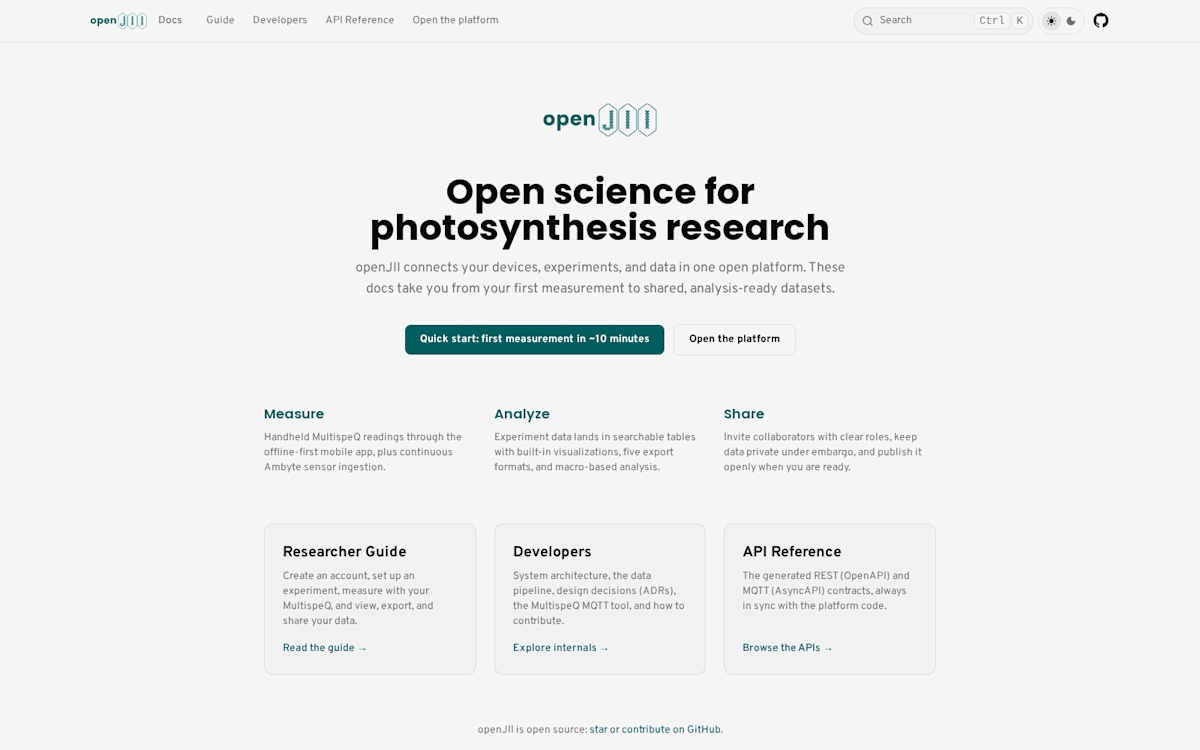
A new docs hub, safer workbooks & richer field measurements
A rebuilt documentation hub written for researchers, workbook upgrades you can review and roll back, platform-wide search, and GPS on every measurement. Update your mobile app to get the latest.
This release is about helping you get more out of openJII: a brand-new documentation hub, workbooks that are safer to change and easier to build on, platform-wide search, and richer field measurements. It also rounds up the platform improvements that shipped quietly alongside the recent mobile updates. To get the full experience, update your mobile app to the latest version from the App Store or Play Store.
📚 A new documentation hub
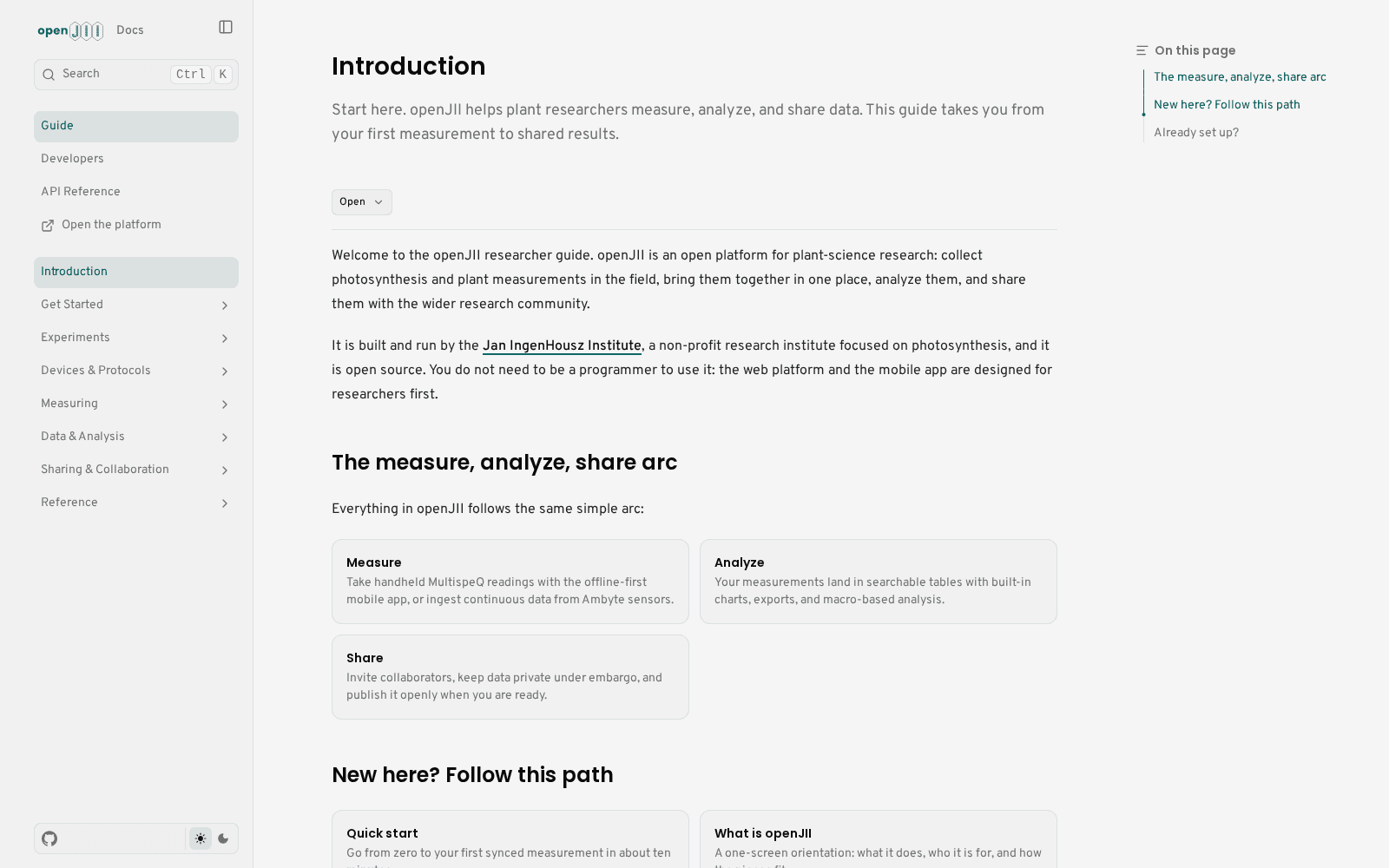
The openJII docs have been rebuilt from the ground up, written for researchers first, not developers.
Researcher Guide: a step-by-step path from creating your account and taking your first measurement to analyzing and sharing data, for both the web platform and the mobile app.
Write your own protocols and macros: new authoring guides walk you through building MultispeQ protocols and analysis macros, with worked examples.
Help where you need it: the platform and the docs now link both ways: help buttons in the app take you to the exact page that explains the screen you are on, and the docs link straight back into the platform.
Always-current API reference: generated directly from the platform code, so it never drifts out of date.
🧪 Workbooks: safer changes, more control
A wave of workbook improvements focused on trust: knowing exactly what changes before it changes, and being able to undo it.
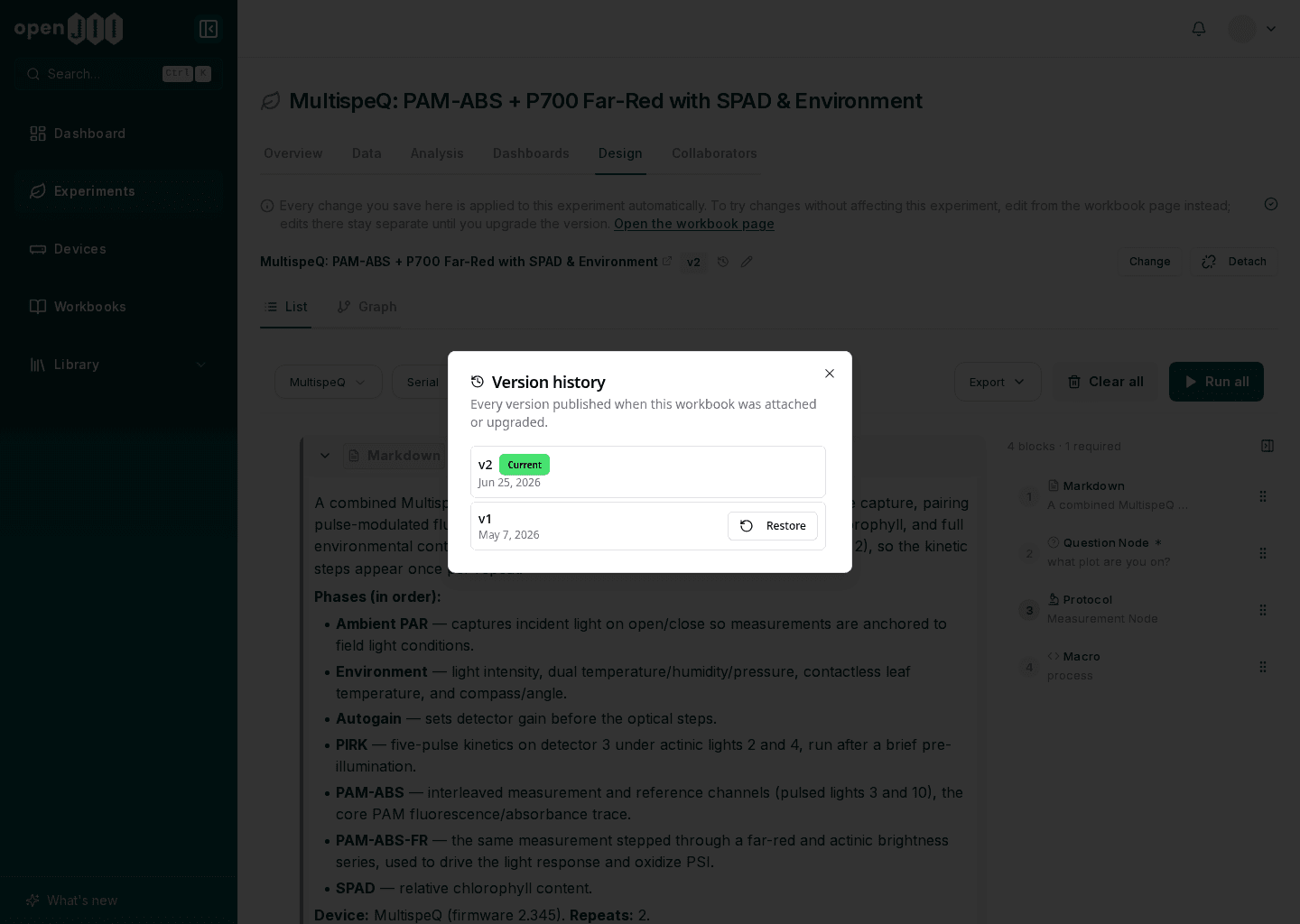
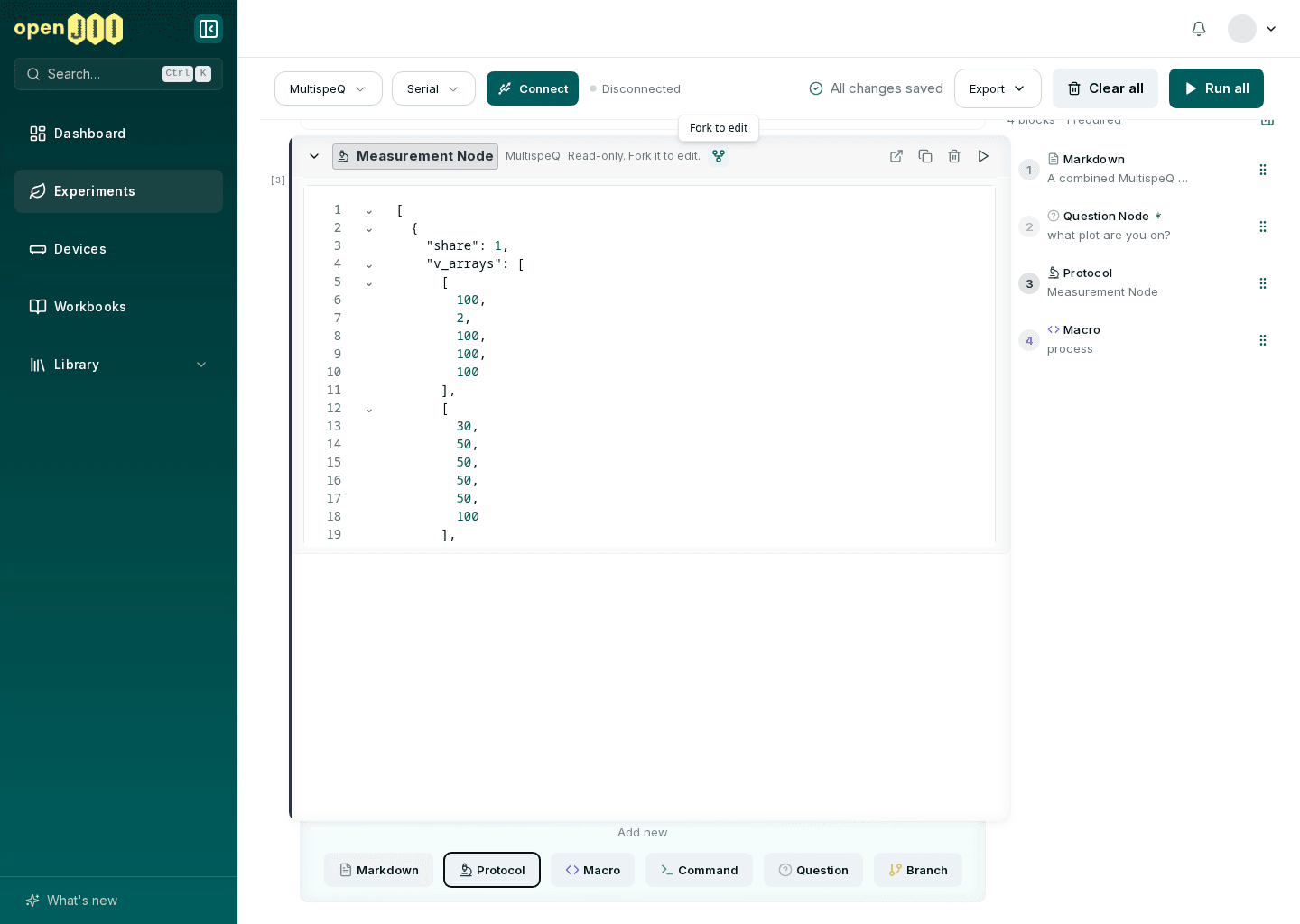
Review before you upgrade: when a shared protocol or macro gets a new version, you now see a clear summary of what changed before deciding to upgrade your workbook.
Version history and rollback: browse a workbook's previous versions and roll back with one click if an upgrade doesn't work out.
Make it your own: found a useful protocol or macro someone else published? Fork it into your own editable copy directly from the workbook editor.
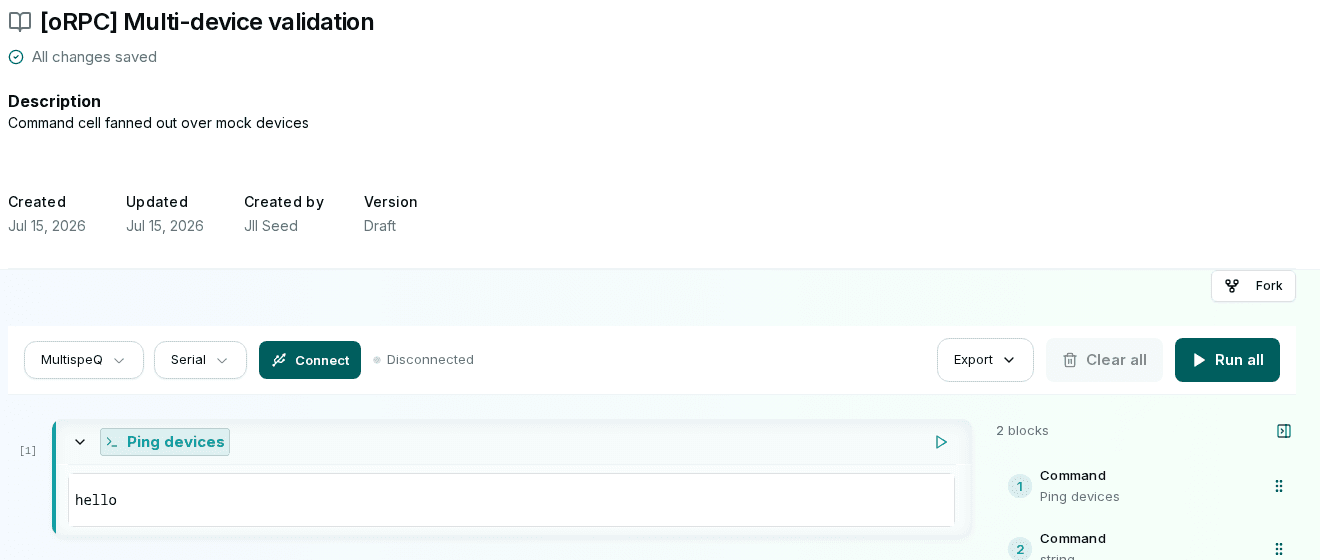
Device commands inline: send a command to your device as its own workbook step, without wrapping it in a full protocol.
Small comforts: add descriptions to workbooks so collaborators know what they're for, and rename items inline.
Fixed: macros containing special characters (µ, arrows, smart quotes) now save reliably instead of silently losing your code.
🔍 Find anything, faster
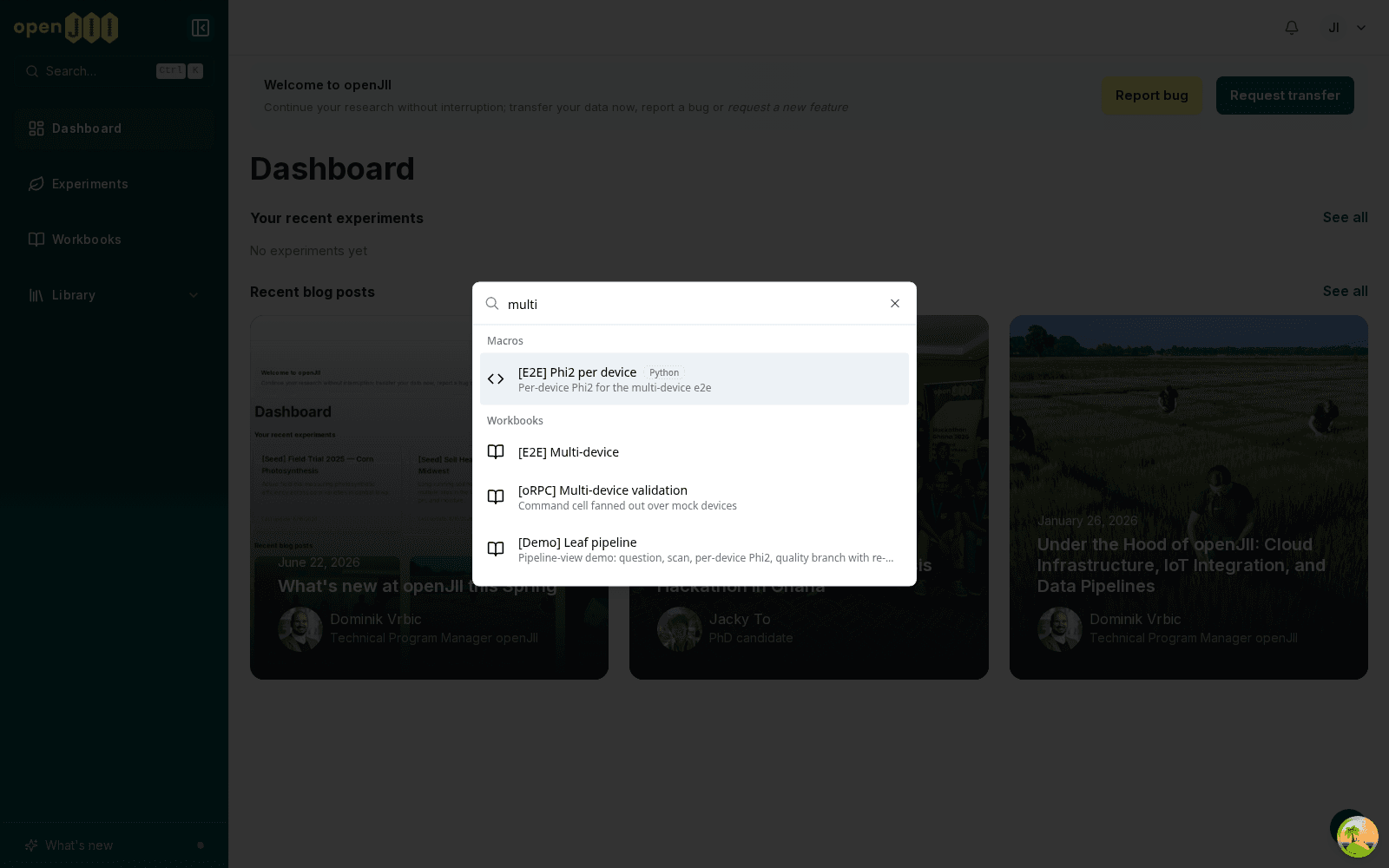
Global search: search across your experiments, workbooks, protocols and macros from one place, with smart ranking and tolerance for typos.
📍 Richer measurements in the field
GPS location on every measurement: the mobile app can now record where each measurement was taken, and the location travels with your data all the way into analysis.
Multi-device sessions: measure with several sensors in one session, with the readings kept bundled together. Introduced with mobile 2.16, and workbooks can now fan a step out across all connected devices.
Better time estimates: long protocols now show more accurate duration estimates, so a slow measurement is no longer mistaken for a stuck one.
📱 Update your mobile app
The mobile app has moved quickly over the past week: versions 2.17 through 2.19 bring GPS capture, groundwork for new sensor types, and stability fixes (experiment names no longer revert, plot numbering stays put, bottom sheets are back to normal, and a rare Android crash after heavy use is gone). Update from the App Store or Play Store to make sure you have the latest.
🛠️ Behind the scenes
Plenty of invisible work shipped too: a modernized API layer across web and mobile, a faster and more maintainable data pipeline, upgraded platform foundations, and new availability monitoring, all aimed at keeping openJII fast and dependable as it grows.